Frankenstitch: A Handcrafted Font for Authentic Digital Design
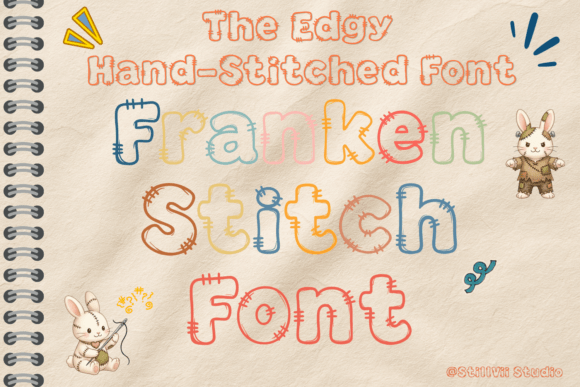
For creators seeking a unique and expressive typeface, Frankenstitch offers an exceptional alternative to mass-produced fonts. This premium hand-drawn faux stitch font is designed for those who value the human touch in their digital work. Unlike auto-generated brushes or generic typefaces, Frankenstitch brings an authentic, raw, and characterful aesthetic that stands out in any project.
The design process behind Frankenstitch involved meticulous attention to detail. Every stitch, curve, and edgy scratch was drawn by hand over many hours, ensuring that each character carries a sense of individuality and craftsmanship. This dedication results in a font that feels genuinely handcrafted, making it ideal for projects that require a personal and artistic flair.
Key Features of Frankenstitch
Frankenstitch includes a comprehensive set of characters and design elements, making it versatile for various creative applications. The font comes in both OTF and TTF formats, providing compatibility across different platforms and software. It features a full uppercase and lowercase alphabet, along with numbers and punctuation, allowing for flexible use in text-based designs.
In addition to the standard characters, Frankenstitch includes 100 hand-drawn textured details. These textures add depth and dimension to the typography, enhancing the visual appeal of any project. Whether used in print or digital formats, these details contribute to a more dynamic and engaging design.
Applications of Frankenstitch
The versatility of Frankenstitch makes it suitable for a wide range of creative projects. One of its primary uses is in Print then Cut applications, where the font's intricate details can be precisely cut to create custom shapes and patterns. This makes it a valuable tool for designers working on handmade items such as labels, tags, and decorative elements.
Sublimation printing is another area where Frankenstitch shines. The font’s textured details can add a unique visual element to fabric designs, making it ideal for creating edgy apparel or quirky quote graphics. Its hand-drawn aesthetic complements the organic nature of sublimation, resulting in designs that feel both modern and artisanal.
For digital crafts, Frankenstitch provides a fresh and distinctive look that sets projects apart. Journaling pages, patchwork designs, and other creative works benefit from the font’s characterful style. Its ability to convey a sense of authenticity makes it a popular choice among hobbyists and professionals alike.
Why Choose Frankenstitch?
One of the main advantages of Frankenstitch is its ability to add a human touch to digital designs. While many fonts rely on uniformity and precision, Frankenstitch embraces imperfections and irregularities, giving each character a unique identity. This quality is especially valuable for projects that aim to evoke a handmade or artisanal feel.
Another benefit is the font’s adaptability. Whether used in a minimalist design or a complex composition, Frankenstitch maintains its visual impact without overwhelming the overall layout. Its balance between detail and readability ensures that it remains functional while still standing out as a distinctive typeface.
For educators and researchers, Frankenstitch offers an interesting case study in the intersection of traditional craftsmanship and digital design. Its creation process highlights the value of manual techniques in an increasingly automated world, providing insights into the evolving role of artistry in technology.
Considerations When Using Frankenstitch
While Frankenstitch is highly versatile, it is important to consider the context in which it is used. Its detailed texture may not be suitable for all design styles, particularly those that prioritize simplicity or minimalism. However, for projects that embrace a more expressive and tactile aesthetic, the font’s characteristics are a significant asset.
Users should also be mindful of file size and performance when incorporating Frankenstitch into larger projects. The font’s intricate details may require additional processing power, especially in graphic design software that handles complex vector graphics. Optimizing the font for specific applications can help maintain efficiency without compromising quality.
Finally, understanding the intended audience is crucial when using Frankenstitch. For instance, a design targeting a younger demographic may benefit from the font’s edgy and playful style, while a more professional setting might require a subtler approach. Adapting the font’s use to match the project’s goals ensures that it enhances rather than detracts from the overall message.
Conclusion
Frankenstitch represents a thoughtful blend of traditional craftsmanship and digital innovation. Its hand-drawn details and characterful design make it a standout choice for creators looking to infuse their work with authenticity and personality. Whether used in print, digital, or textile applications, the font offers a unique way to express creativity and stand out in a competitive design landscape.