Daily: A Timeless Handwritten Font for Creative Expression
In the world of typography, few fonts manage to balance elegance with approachability as effectively as Daily. This handwritten font has gained a loyal following among designers, artists, and brand creators who value its natural, organic feel. Whether you're crafting a logo, designing a poster, or simply adding a personal touch to your work, Daily offers a unique visual language that can elevate any project.
What sets Daily apart is its subtle imperfections and the human-like quality of each letter. Unlike rigid, geometric typefaces, Daily mimics the flow of handwriting, making it ideal for projects that require warmth and authenticity. Its versatility allows it to shine in both digital and print formats, ensuring that your design remains consistent across different mediums.
The Characteristics of Daily
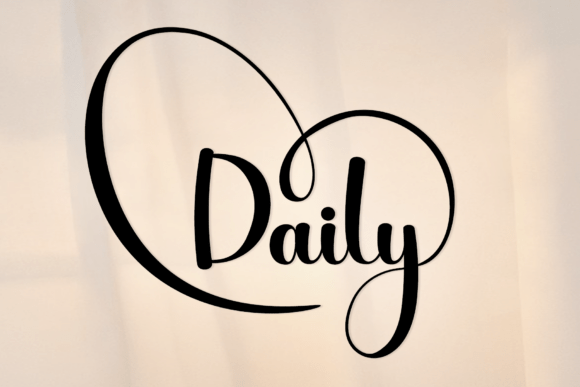
Daily features a soft, flowing structure that gives it a friendly and inviting appearance. Each letter is slightly irregular, which contributes to its handcrafted aesthetic. This makes it particularly effective for branding that aims to convey creativity, sincerity, or a personal connection with the audience.
The font also includes a wide range of characters, including uppercase and lowercase letters, numbers, and punctuation. This ensures that it can be used in a variety of contexts, from short slogans to longer text blocks. The spacing between letters is carefully designed to maintain readability without sacrificing the font's distinctive style.
One of the most appealing aspects of Daily is its ability to adapt to different design styles. It works well with minimalist layouts, where its simplicity can stand out, as well as with more complex designs that benefit from its organic texture. This flexibility makes it a valuable tool for a wide range of creative professionals.
Applications of Daily in Design
Designers often turn to Daily when they want to add a personal or artistic flair to their work. For example, in branding, the font can help create a sense of trust and familiarity. Companies that prioritize customer relationships or emphasize craftsmanship may find that Daily aligns well with their brand identity.
Another common use for Daily is in marketing materials, such as social media posts, banners, and email newsletters. Its readable yet expressive nature makes it suitable for headlines, call-to-action buttons, and other visual elements that need to capture attention while maintaining clarity.
In addition to logos and marketing, Daily is frequently used in editorial design. Magazines, blogs, and publications that aim to evoke a sense of creativity or storytelling may incorporate the font to enhance the visual appeal of their content. When paired with complementary typefaces, Daily can add depth and character to a layout without overwhelming the reader.
Advantages of Using Daily
One of the primary advantages of Daily is its ability to convey emotion through typography. Because it resembles handwriting, it can evoke a sense of intimacy and authenticity that other fonts may not achieve. This is especially useful in campaigns that seek to connect with audiences on a personal level.
Another benefit is its ease of use. Unlike some more complex typefaces, Daily is straightforward to implement in design software. Most graphic design tools, including Adobe Illustrator, Photoshop, and Figma, support the font, allowing users to integrate it seamlessly into their workflow.
Daily also offers a high degree of customization. Users can adjust the weight, size, and spacing of the font to suit their specific needs. This adaptability ensures that the font remains functional across different design scenarios while retaining its signature style.
Considerations When Using Daily
While Daily is highly versatile, it’s important to consider its limitations. For instance, it may not be the best choice for body text in long-form documents. Its cursive style can reduce readability when used in large blocks of text, so it’s typically reserved for headings, titles, and short phrases.
Additionally, the font’s informal tone may not be appropriate for all brands. Companies that aim to project professionalism or authority might find that Daily feels too casual for their needs. In such cases, a more structured typeface may be a better fit.
It’s also worth noting that the effectiveness of Daily depends on how it’s paired with other design elements. A poorly chosen color scheme or background can diminish the font’s impact. Experimenting with different combinations can help ensure that the font enhances rather than detracts from the overall design.
Real-World Examples of Daily in Action
Many well-known brands have successfully incorporated Daily into their visual identities. For example, a boutique coffee shop might use the font in its logo to communicate a sense of warmth and community. Similarly, an independent artist could use Daily in promotional materials to reflect their creative personality.
On a larger scale, digital platforms that focus on creativity and self-expression often feature Daily in their branding. These platforms recognize the font’s ability to resonate with users who value individuality and artistic freedom. By using Daily, they reinforce their commitment to supporting creative expression.
Even in educational settings, Daily has found a place. Teachers and educators sometimes use the font in presentations or handouts to make learning materials more engaging. Its friendly appearance can help create a more approachable atmosphere, encouraging students to participate and connect with the content.
Conclusion
Daily is more than just a font—it’s a tool that empowers designers to express themselves creatively. Its unique characteristics, practical applications, and emotional resonance make it a valuable asset in a wide range of design projects. Whether you’re working on a personal passion project or a professional brand, Daily offers a way to bring your vision to life with authenticity and style.